Blogs

Don't delete your skills, audit them
Boris Cherny, who created Claude Code and runs it at Anthropic, gave some advice recently that made …

A Skill Is Just an Agent. So Measure Your Changes.
TL;DR: A skill is just an agent, a prompt running in a harness, so you can test a change to it …

The two-person team: the domain expert prompts, the engineer connects
At RenderATL I had the same conversation twice, from two different sides.
The first was at the …

The EU AI Act wants a record. Your traces are already most of one.
I read a piece by Angie Jones from the Agentic AI Foundation this week, The EU AI Act and the new …

Your eval criteria are already written, just scattered across three systems
In an earlier post I built a self-improving agent by mining a context graph out of data the team …

Evals Are a Revenue Strategy, Not a Safety Net
Here’s the moment every AI team knows. You have a demo that works. Not always, but most runs, …
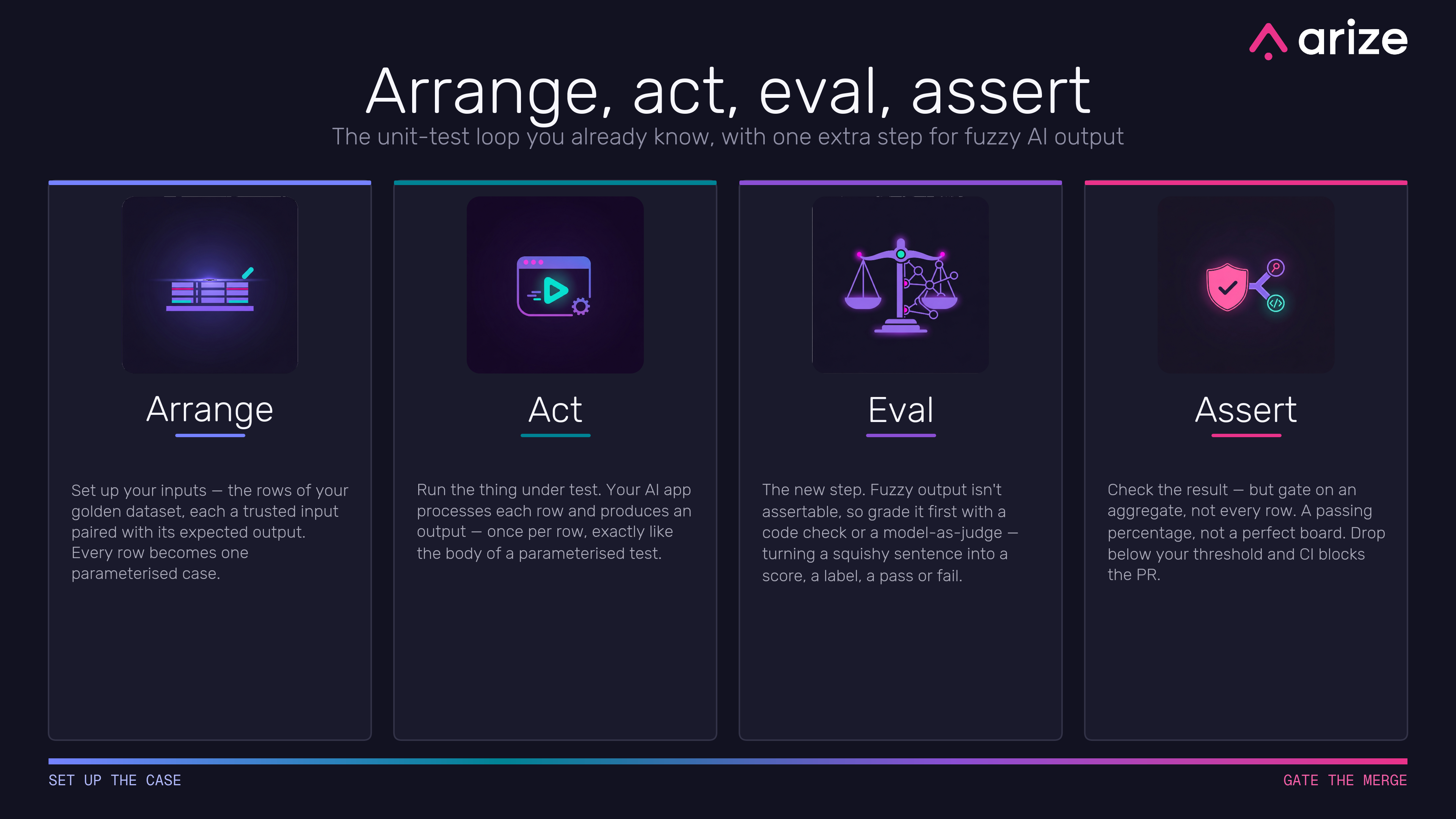
Evals belong in your CI/CD pipeline
The other day I wrote that evals are just testing - the same old loop of “decide what good …

Long-horizon agent benchmarks are fragmenting: a field guide to what each one actually measures
Originally published on the Arize AI blog: Long-horizon agent benchmarks are fragmenting: a field …

AI evals are just testing (with a much weirder answer key)
Years ago, before “AI” meant chatbots and before anyone said the word “eval” …

The Phoenix Project still holds up, even if you replaced all the code with agents
I reread The Phoenix Project last month. I do this every year or two — it’s one of those books …
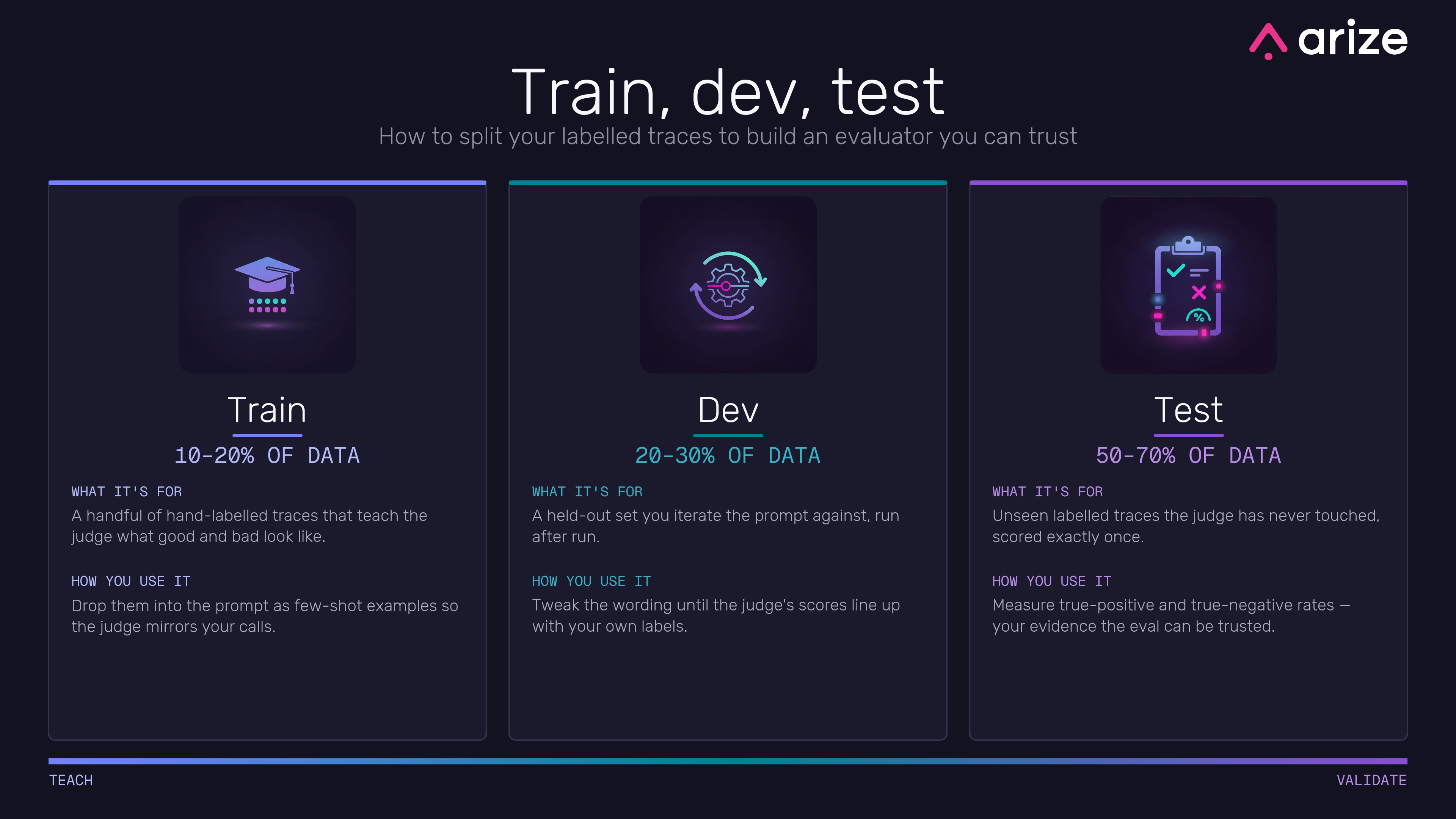
Train, dev, test: the split that makes an LLM judge trustworthy
Say you’ve built an LLM judge and you want to know if it’s any good. The obvious move is …
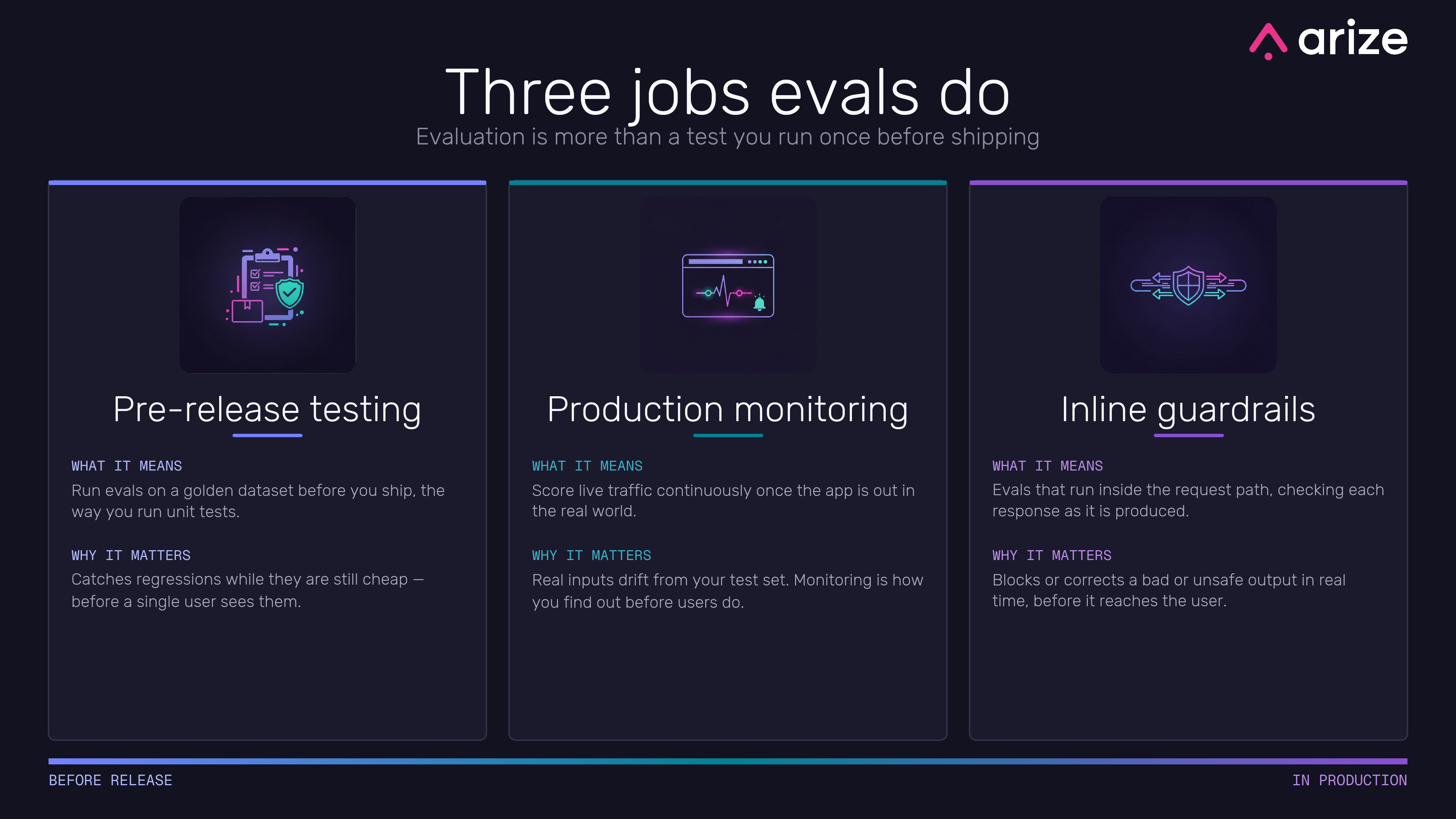
Evals do three jobs, not one
Ask most people what an eval is for and you’ll get some version of “testing”. You …