AI sucks.
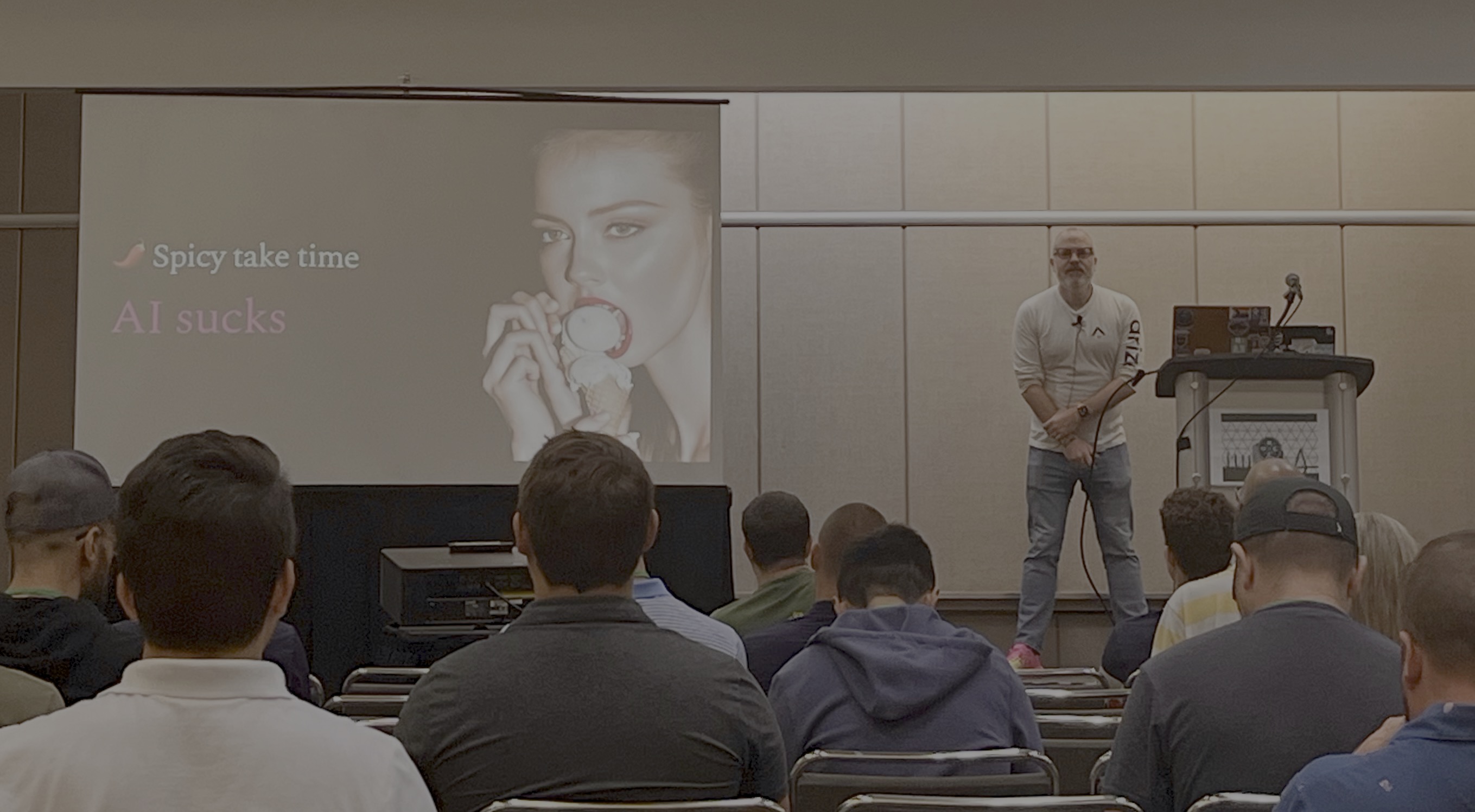
I said that on stage at KCDC this year, and I meant it. Not because the tech is useless, but because “this is amazing” is the single most dangerous thought you can have while building with it. The demo dazzles you, you get the warm fuzzies, and you ship. Then it meets a real human and falls over.
Let me show you what I mean.
Exhibit A: healthcare
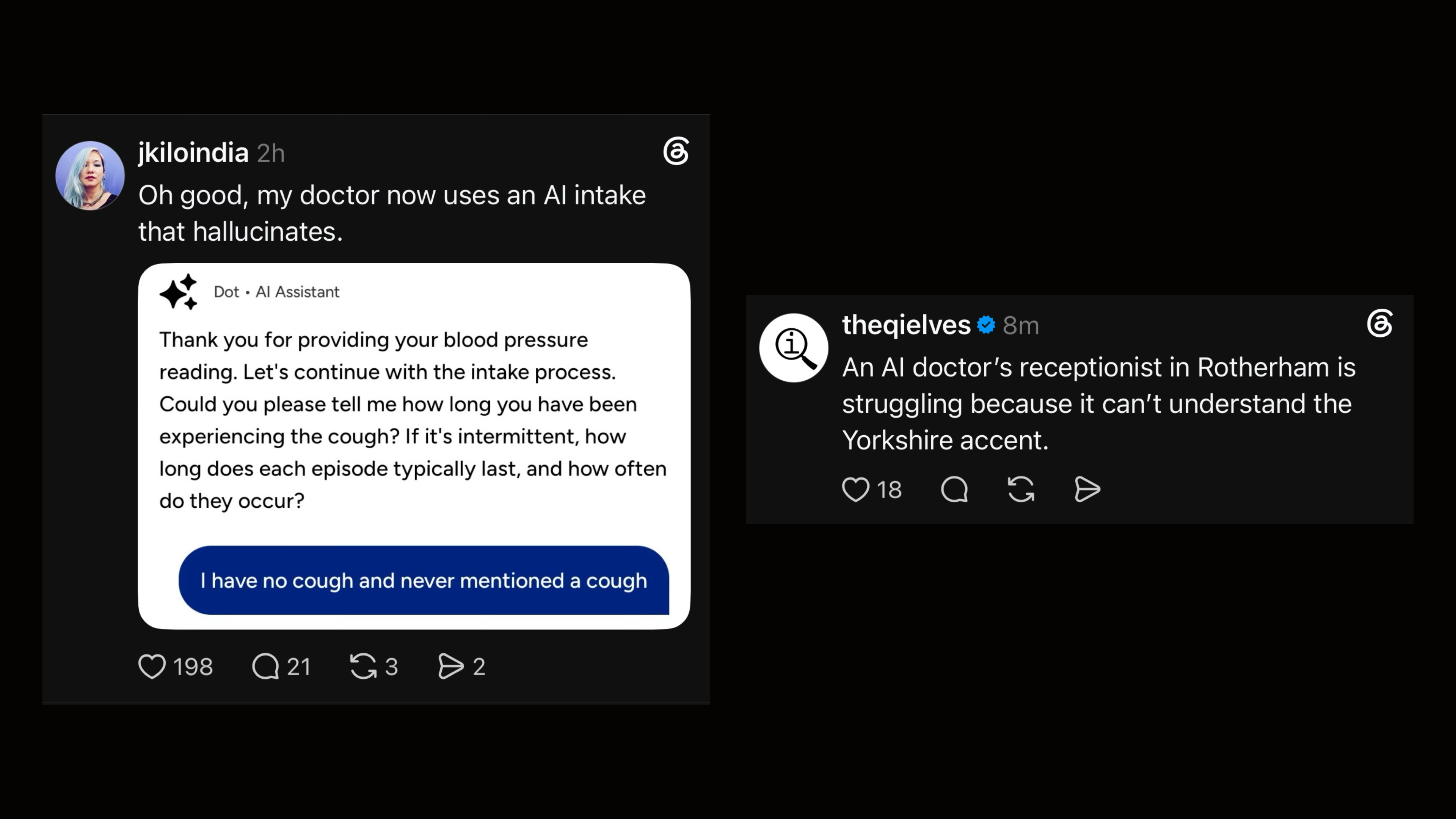
One team shipped an intake bot that confidently invents a symptom the patient never had. In any other software we would call that a bug and stop the release. In AI we call it a hallucination, shrug, and ship it anyway. In the medical field it is malpractice and could lead to injury or death.
Another shipped a receptionist that does great in testing and then meets an actual Yorkshire accent, which is a problem as it was deployed to a doctor’s office in… Yorkshire!
Exhibit B: the bot that can’t understand its own order
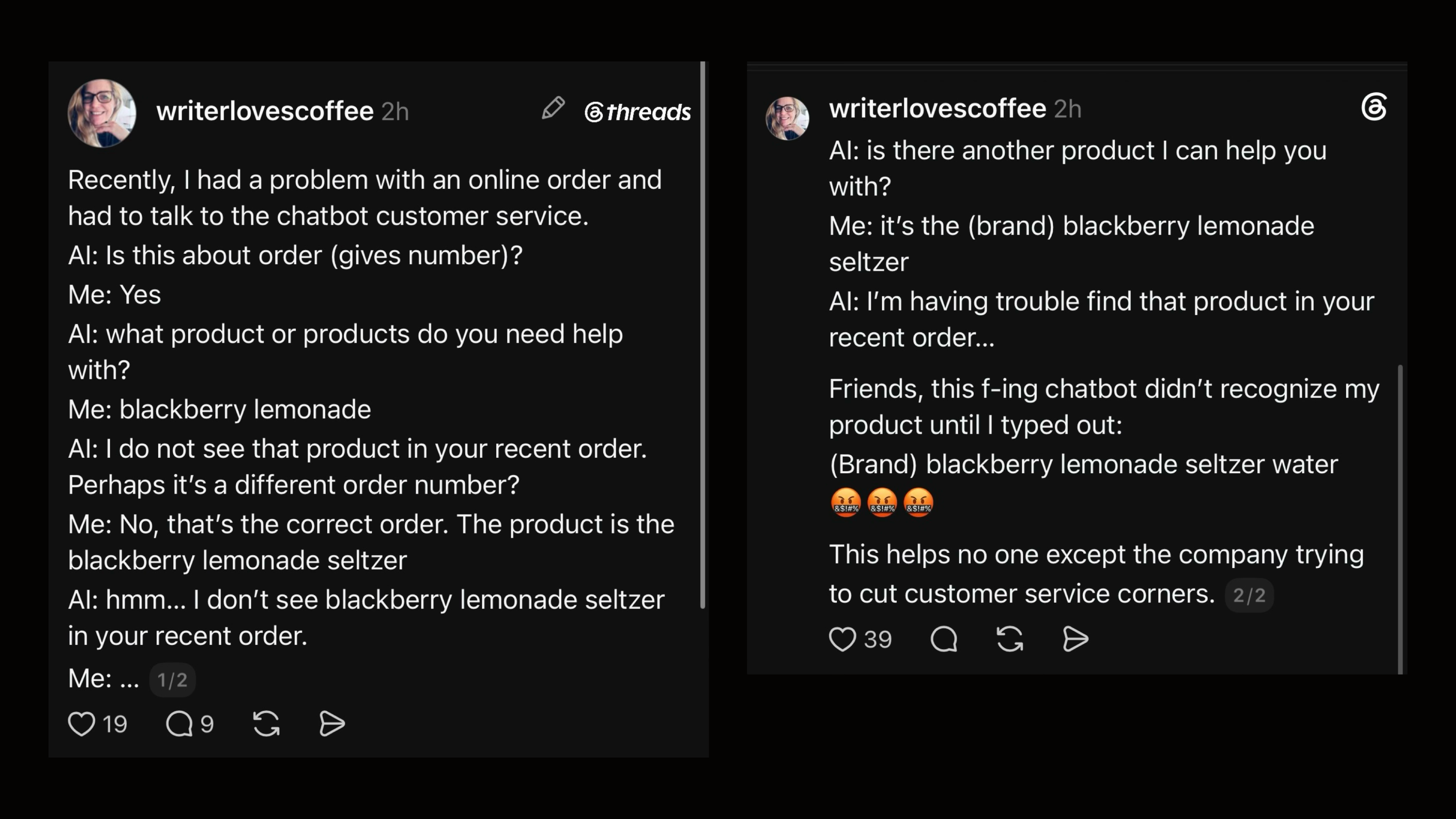
The product was right there, the customer knew what they bought. The only thing standing between them and an answer was a bot that needed the magic words typed in exactly the right order. That is not customer service, that is a keyword search wearing a personality.
Cynicism is a feature
So yes, AI sucks. But that is the right mindset, not a reason to give up. The engineers who build good AI products are the cynical ones. They assume the model is lying until proven otherwise. They assume it will meet an accent it has never heard, a symptom nobody mentioned, an order phrased the wrong way, and they go looking for those failures before their users do.
The opposite of cynical here isn’t optimistic. It’s careless.
Deal with sucky AI
A demo that works once is not evidence. It’s a vibe. And vibes are how you end up with a receptionist that can’t book appointments in part of England, or a pissed off customer who will never buy brand name blackberry lemonade seltzer water from you ever again.
The fix is boring and it works: evaluate the thing. Build a real test set out of the messy inputs your actual users will throw at it, run your model against it, and measure whether it does what you claim. When it hallucinates a cough, you want a failing eval to catch it, not a patient. Keep evaluating in production too, because the real world keeps inventing new ways to embarrass you.
Stay cynical. Test the thing. AI sucks right up until you can prove, with evidence, that yours doesn’t.